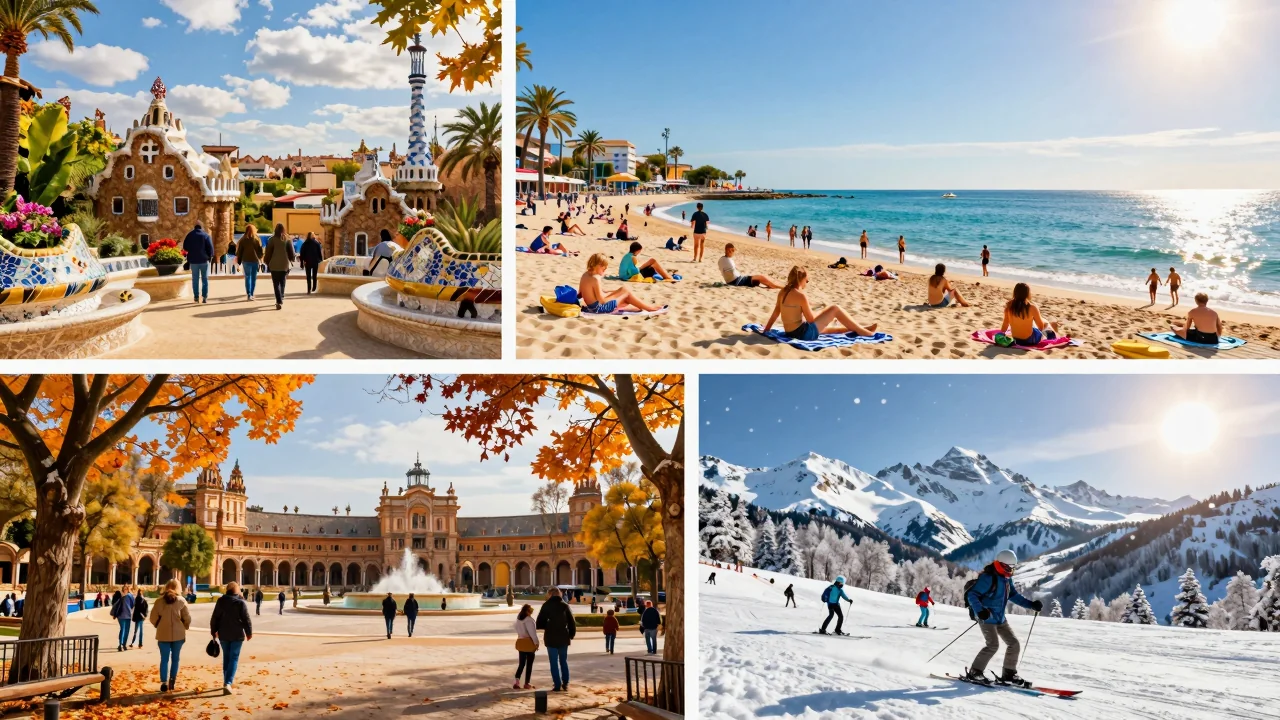
Imagine standing on the sun-drenched shores of Costa del Sol, the Mediterranean breeze ruffling your hair as you sip on a fresh horchata—this is Spain in summer for American travelers. The vibrant energy of Barcelona’s La Rambla under the golden July sun or the crisp autumn air of Madrid during October’s Feria de San Miguel are just glimpses into why Spain weather year round attracts millions yearly. Whether you’re dreaming of ski slopes in the Pyrenees or strolling through Valencia’s orange groves in spring, 2026 promises to be another stellar year for exploration.
From Andalusia’s perpetual sunshine to Galicia’s misty coastal charm, Spain’s diverse climate offers something for every American traveler. Picture cozy winter evenings in Seville’s tapas bars, wrapped in a wool poncho bought from a local artisan market, or hiking the Camino de Santiago under clear blue skies in May. Understanding these seasonal shifts is key to crafting an unforgettable journey—whether you’re chasing perfect beach days or cultural festivals that define each region.
Spain Weather Year Round Americans: Overview
Imagine stepping off your plane in Barcelona on a crisp February morning, only to find sunshine and mild temperatures—perfect for strolling through La Rambla without the summer crowds. This is just one example of why understanding Spain weather year round is essential for American travelers planning their 2026 adventures.
Spain’s climate is as diverse as its landscapes, offering something for everyone regardless of when you visit. From the sun-drenched coasts of Andalusia to the lush greenery of Galicia, each region has its own unique rhythm dictated by geography and ocean currents. Whether you’re seeking a beach getaway in Mallorca or a ski trip in the Pyrenees, knowing what to expect will help you pack the right gear—like the The North Face Thermoball Eco Snow Triclimate Jacket (MSRP: $250), perfect for variable mountain weather—and plan activities that align with local conditions.
General Climate Patterns Across Regions
Spain’s climate is a tapestry woven with Mediterranean, Atlantic, and even continental influences. The southern and eastern coasts bask in the warm embrace of the Mediterranean Sea, where summers are long and winters mild—ideal for sun-seekers. In contrast, northern regions like Asturias and Cantabria experience more rainfall thanks to Atlantic winds, creating lush landscapes perfect for hiking or exploring historic towns.
To help you navigate these variations, here’s a quick breakdown:
– Andalusia (Seville, Malaga): Hot, dry summers; mild, rainy winters.
– Costa Brava (Barcelona, Girona): Warm summers; cool, wet winters.
– Galicia (Santiago de Compostela): Cooler temperatures year-round with frequent rain.
– Central Spain (Madrid, Toledo): Hot summers; cold winters with chilly nights.
– The Canary Islands (Tenerife, Gran Canaria): Spring-like weather nearly all year.
Understanding these patterns ensures you’re prepared for anything—whether that means packing the Patagonia Nano Puff Jacket ($200) for breezy coastal evenings or opting for lightweight layers like the Uniqlo AIRism UV Protection Shirt ($35) when exploring inland cities. With this knowledge in hand, let’s dive deeper into what each season brings to Spain’s diverse regions.
Best Times to Visit Spain in 2026 for Ideal Weather
Picture this: a golden sun dipping below the horizon over Barcelona’s beaches, the air warm but not oppressive, and the streets buzzing with locals and travelers alike. This is the magic of Spain during spring and autumn—seasons that strike the perfect balance between pleasant weather and fewer crowds. For American travelers planning their 2026 adventures, these months offer an ideal escape from extreme temperatures back home while still enjoying everything Spain has to offer.
Spring (March-May) brings blooming landscapes and mild temperatures, especially in regions like Andalusia and Catalonia. Imagine strolling through Seville’s vibrant plazas in April, where the average highs hover around 75°F (24°C), or exploring Madrid’s world-class museums in March without breaking a sweat. The cooler mornings and evenings make it perfect for outdoor activities, from hiking in the Pyrenees to wine tasting in La Rioja.
Spring and Autumn Highlights
Spring isn’t just about pleasant weather—it’s also about experiencing Spain at its most lively. The Semana Santa (Holy Week) celebrations in April transform cities like Málaga into breathtaking spectacles of faith and tradition, while the Running of the Bulls in Pamplona (July) is a must-see for adrenaline seekers. Autumn, on the other hand, offers harvest festivals, cooler breezes perfect for exploring historic sites, and fewer tourists than the peak summer months.
“Spring and autumn are the sweet spots for travel in Spain, offering comfortable temperatures and cultural events that peak-season visitors often miss.” — Travel + Leisure
For American travelers, these seasons also mean avoiding the scorching July and August heat that can make cities like Valencia and Córdoba feel overwhelming. Plus, with fewer tourists, accommodations like the luxurious Hotel Alfonso XIII in Seville (priced at around $350/night for spring 2026) become more accessible.
As you weigh the best times to visit, consider how Spain’s weather year round for Americans can shape your itinerary—especially when planning activities that require comfortable outdoor conditions.
Summer Heat: Regional Differences in 2026
The summer of 2026 was one I’ll never forget. Picture this: I’m standing on the bustling streets of Seville in mid-July, the sun beating down like a relentless drummer, while just a few hours north in San Sebastián, locals strolled along the beach in light sweaters. Spain’s summer weather is anything but uniform, and for American travelers planning their trips this year, understanding these regional differences can mean the difference between comfort and discomfort.
Southern Spain, particularly Andalusia, is notorious for its sweltering summers. Cities like Córdoba, Seville, and Granada regularly see temperatures soaring above 100°F (38°C) in July and August, with heatwaves becoming more frequent. In contrast, the northern regions of Galicia, Asturias, and the Basque Country offer a refreshing respite, with highs typically hovering in the mid-70s to low 80s (°F). This stark contrast means that packing for Spain requires careful planning—depending on where you’re headed.
Coastal vs. Inland Temperature Variations
The coastal regions of Spain benefit from cooling breezes that temper the summer heat, making destinations like Valencia, Málaga, and Barcelona ideal for those seeking warmth without extreme conditions. A well-reviewed travel essential for these areas is the Osprey Porter 30 Travel Pack ($150), perfect for carrying lightweight clothing and a reliable sun hat, like the Coolibah Sun Hat ($29.95), which offers UPF 50+ protection.
Inland cities such as Madrid and Zaragoza experience more intense heat due to their distance from the coast. Here, air conditioning is a necessity, especially in places like the LG Dual Inverter Air Conditioner (Model LS180HEV1A) ($999), which many hotels and rentals now feature. To stay cool outdoors, consider the Misting Water Fan by Honeywell ($45.99), a lifesaver during scorching afternoons.
- Andalusia (Seville, Granada): Expect 100°F+ (38°C+) in peak summer.
- Basque Country (San Sebastián): Mild summers around 75–80°F (24–27°C).
- Valencia Coast: Coastal breezes keep temps comfortable at 85°F (29°C).
- Madrid Inland: Frequent heatwaves, reaching 95°F (35°C).
- Galicia (Santiago de Compostela): Cooler summers, ideal for hiking.
Whether you’re lounging on the Costa del Sol or exploring the historic streets of Toledo, knowing what to expect from Spain’s summer weather will help you pack smart and stay comfortable. As we shift our focus, it’s worth considering how these regional differences might impact your travel plans beyond just temperature—like the best times to explore cultural landmarks without the crowds.
Winter Weather in Spain: Skiing and Mild Coastlines
Picture this: It’s December 2026, and you’re standing atop a snowy peak in the Pyrenees, the crisp mountain air biting at your cheeks as you glance down at the pristine slopes below. The sun glints off freshly groomed runs, and the laughter of fellow skiers fills the air. This is winter in northern Spain—a paradise for snow enthusiasts.
Northern Mountain Resorts vs. Andalusia’s Gentle Winters
The Pyrenees, stretching between France and Spain, transform into a winter wonderland from November to March. Resorts like Baqueira-Beret and Formigal-Panticosa boast some of Europe’s best ski conditions, with reliable snowfall thanks to the region’s high elevation. The Spain weather year round for Americans seeking a snowy escape is ideal here, especially in January and February when temperatures drop below freezing at night but remain comfortable during the day.
“The Pyrenees receive an average of 300 centimeters of snow annually, making it one of the most consistent ski destinations in Europe.” — Snow & Mountain Report
Meanwhile, down south in Andalusia, winter paints a entirely different picture. Cities like Seville and Granada bask in mild temperatures, rarely dipping below 10°C (50°F), while coastal areas such as Málaga stay even warmer, perfect for leisurely strolls along the beach or exploring historic landmarks without the summer crowds.
By March, as the snow begins to melt in the mountains, you might find yourself trading ski boots for hiking shoes, eager to explore Spain’s diverse landscapes.
Embrace Spain’s Year-Round Magic with Perfect Timing
Imagine standing on the sun-kissed shores of Costa del Sol in 2026, the Mediterranean breeze gently brushing against your skin as you savor a fresh paella under the golden afternoon light. Or picture yourself wandering through the enchanting streets of Barcelona in late spring, where vibrant blossoms frame every corner and the air hums with energy. Spain’s weather year round for American travelers is a tapestry of diverse climates, each season offering its own unique charm—whether you’re chasing endless sunshine in Andalusia or cozying up by a fireplace in the Pyrenees during winter. By understanding these seasonal rhythms, you can tailor your journey to match your perfect getaway vibe.
From the snow-capped peaks of Sierra Nevada in January to the lively beach festivals of Ibiza in July, Spain’s weather year round for Americans is as unpredictable as it is alluring. Spring brings mild temperatures ideal for exploring historic cities like Seville or Granada without the summer crowds, while fall offers a sweet spot for wine lovers in La Rioja, where harvest season paints the vineyards in rich hues. And let’s not forget the mild winters in Valencia or Mallorca, where you can enjoy outdoor activities under clear blue skies. With 2026 just around the corner, now is the time to start planning your Spanish adventure—seasons included.
So, are you ready to craft your dream trip? Dive into Spain’s ever-changing weather patterns and let them guide you to an unforgettable experience in 2026!
