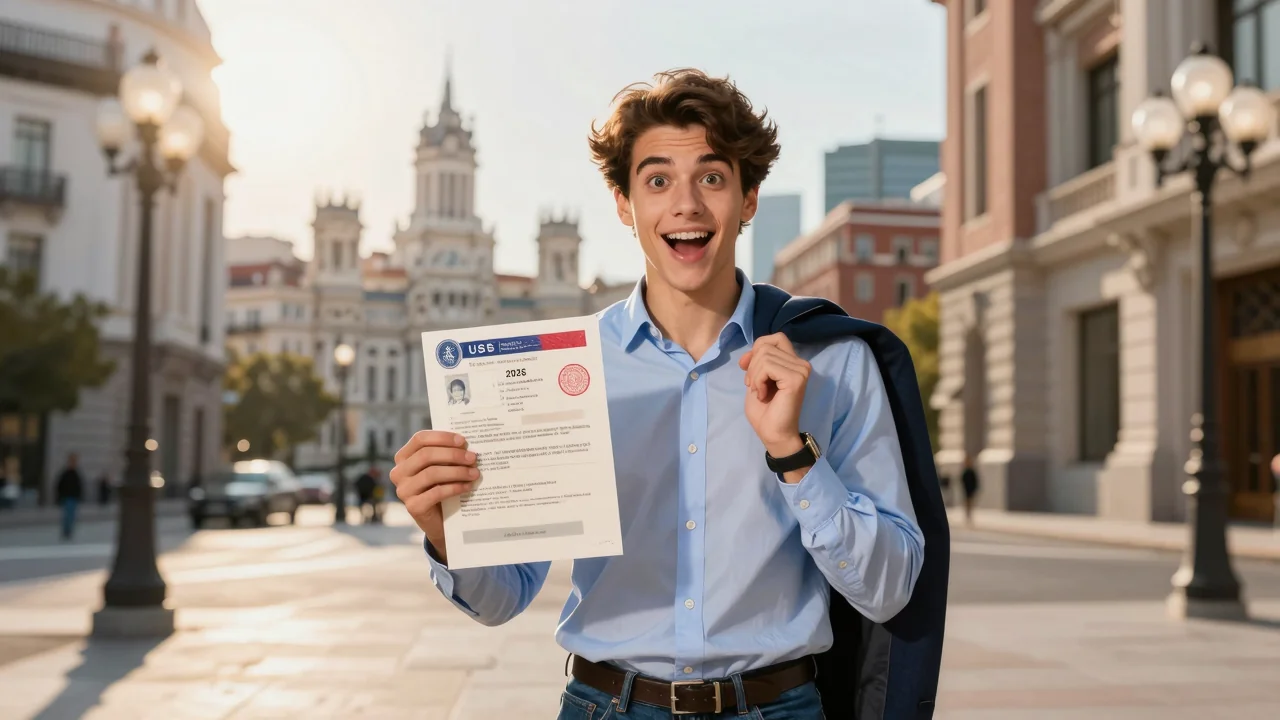
Don’t believe the rumor that obtaining a Spain student visa USA is overly complicated. It’s actually quite manageable when you know how to navigate the system. Take María, for example. She’s a talented engineering student from Barcelona who wasted months worrying about documents before discovering she could have simplified everything with proper advice.
The U.S. Embassy in Madrid issued around 15,000 Spanish student visas last year, demonstrating that with careful preparation, studying at an Ivy League institution or a leading tech program is entirely achievable.
Success depends on mastering the details of the Spain student visa USA process, including choosing the correct F-1 visa type and getting ready for the SEVIS fee and interview. In 2026, the rise of digital nomad culture has made studying abroad more appealing than ever—but it’s also increased competition.
Whether your goal is Stanford’s innovation labs or MIT’s robotics program, this guide will help you tackle each step efficiently. That way, you can spend less time buried in paperwork and more time preparing for your adventure. Let’s break down those visa requirements one by one.
Exploring Student Visa Options for 2026
Imagine the scene: A cool autumn breeze sweeps through Madrid as 19-year-old Sofia opens her laptop. Her goal? Studying computer science at Stanford University. Naturally, she needs to figure out which Spain student visa USA fits her plans.
The U.S. offers various student visas in 2026 to accommodate different educational and personal needs. Spanish students like Sofia have multiple choices depending on their objectives—whether they’re aiming for a degree, intensive language programs, or vocational training.
The F-1 Visa: Your Passport to Academic Success
Sofia’s best bet is likely the F-1 visa. This non-immigrant option is perfect for students enrolled in SEVP-certified U.S. institutions. To qualify:
– She must secure acceptance from a school approved by the Student and Exchange Visitor Program (SEVP).
– Proof of sufficient funds ($20,000–$50,000 per year) covers tuition and living costs.
– Strong ties to Spain (like family or property ownership) reassure authorities she’ll return home after graduation.
– A successful interview at the U.S. Embassy in Madrid is a must.
– English proficiency tests like TOEFL (minimum 80) or IELTS (6.5+) are required by most universities.
One major perk? The F-1 visa permits part-time on-campus work and optional practical training (OPT). This lets students gain hands-on experience—imagine interning at a hotshot tech firm in Silicon Valley. It’s easy to see why the F-1 is the top pick for Spanish students pursuing U.S. higher education.
Sofia wonders if other visa types might better suit different academic goals, such as short-term courses or specialized training programs.
Spain Student Visa USA Application Requirements
Think about it: a lively café in Madrid, your laptop displaying dreams of Stanford lectures, New York City adventures, or groundbreaking research at MIT. For students from Spain, this exciting future starts with the Spain student visa USA process.
Securing approval means carefully preparing each requirement. The U.S. Embassy in Spain has strict criteria, so attention to detail is key—especially when gathering documents for your 2026 application.
Documents Needed for Your 2026 Visa
First up: compiling all required paperwork. Ensure your passport remains valid for at least six months beyond your planned stay. Don’t forget the DS-160 form, which you can complete online. You’ll also need a recent photo (2×2 inches) that meets specific standards—perhaps one taken with a Canon EOS Rebel T7i for perfect clarity.
Financial stability is another must. The U.S. government expects proof that you can fund your studies and living costs independently. Bank statements, sponsorship letters, or Fulbright scholarship notices (up to $34,000 in funding) are typical options here.
“Whenever possible, submit original documents—photocopies might slow down processing.” — U.S. Embassy Spain Visa Office
Your acceptance letter from a SEVP-certified school is absolutely essential. It confirms your enrollment in an approved program under the Student and Exchange Visitor Program (SEVP). If you’re transferring schools, include the SEVIS transfer form too.
Once everything’s organized, you’ll be ready to book that visa interview—one step closer to your American academic adventure. Fingers crossed for a smooth process!
Application Process Step-by-Step
The morning sun peeked over Barcelona as Sofía quickly scanned her emails before leaving for the U.S. consulate. Her journey had been long—getting into New York University, collecting all necessary documents, and saving up for her studies abroad. Now, she faced the Spain student visa USA interview.
For Spanish students like Sofía applying in 2026, booking the visa interview is the first big step. It’s essential to act quickly because spots fill fast. The process kicks off with completing the DS-160 form online. Every detail matters here: personal info, passport specifics, and travel plans must be spot-on. Once submitted, applicants get a confirmation page with a barcode needed for scheduling the interview.
Timing is everything. Peak seasons mean appointments disappear in a flash, so flexibility helps. After booking, applicants need to pay two non-refundable fees—the SEVIS fee ($350) and the visa application fee ($185). Sofía had taken care of that ahead of time for extra peace of mind.
Document preparation is key. Along with her passport, she gathered the DS-2019 or I-20 form, financial statements, and English test scores like TOEFL or IELTS. For students eyeing long-term goals in the U.S., resources such as Buying Property in Spain from USA Essential Guide might come in handy later.
The consulate’s imposing entrance did little to ease Sofía’s nerves. But she knew her preparation would carry her through the interview, where officers evaluate both paperwork and sincerity toward studying in America.
With approval in hand, Sofía felt a rush of excitement—this was just the start. The real challenge awaited: thriving as an international student. (I have to admit, I’d be nervous too!)
Common Mistakes to Avoid When Applying
Picture yourself in a charming Madrid café, laptop open to the U.S. embassy site as you meticulously review every detail of your Spain student visa USA application. It’s exciting—you’ve had your heart set on NYU or MIT for ages—but even one small mistake could throw everything off track. Surprisingly, many applicants make errors that are entirely preventable.
First off, don’t overlook how crucial proper documentation is. Forgetting something as simple as the DS-160 confirmation page can automatically disqualify you. Proof of financial stability often trips people up too. Bank statements need to show steady funds for at least a year, and applicants frequently miss adding extras like scholarship letters or sponsorship papers.
Pro tip: A well-organized system—whether digital folders in Google Drive or old-school labeled tabs in a notebook—saves tons of stress later on.
Why Applications Get Rejected
Rejections usually stem from multiple small issues rather than one big problem. Some applicants assume their IELTS or TOEFL scores are enough, only to realize they submitted outdated results. Others forget to show strong ties to Spain, like family commitments or property ownership, making consular officers doubt their plans to return home.
Timing is another major factor. The U.S. embassy in Madrid advises applying at least three months early, yet students often procrastinate—only to face delays during busy periods. A little planning goes a long way here. Use the embassy’s online scheduler and set reminders (Google Calendar is great for this) to stay ahead.
By steering clear of these common mistakes, your Spain student visa USA process will be far smoother. Now that we’ve covered what not to do, let’s move on to the next key step in your application journey.
Financial Considerations & Scholarships
Let’s say you’re in a lively café in Madrid, going over your expenses for studying in the USA: tuition, rent, and other costs. For Spanish students aiming for higher education there, getting a Spain student visa USA involves more than just documents—it requires financial planning too. From 2024 to 2026, living costs in the U.S. have been climbing steadily.
The bright side is that with smart budgeting, scholarships, and part-time jobs, you can make studying abroad both affordable and rewarding. Many students miss out on financial aid options, which range from government grants to university-specific scholarships. The Fulbright Program, for example, supports Spanish citizens pursuing studies in the U.S., while top schools like Harvard and MIT offer need-based assistance that could cover 100% of tuition for international students.
Budgeting for Living Expenses in 2026
By 2026, costs in major student hubs—New York, Los Angeles, or Boston—are expected to keep rising. That said, with careful planning, you can control your spending. First, estimate monthly costs: rent in a shared apartment might run $1,500 to $3,000 alone, plus groceries ($300–$400), transportation (a 2024 Honda Civic could cost around $20,000, with gas averaging $3.50 per gallon), and other essentials like books or entertainment.
Here are some ways to save:
– Work part-time: F-1 visa holders can work up to 20 hours weekly on campus.
– Find affordable housing: University dorms often include meal plans, cutting down food costs.
– Take advantage of student discounts: Tech giants like Apple and Adobe offer free or discounted software for students.
– Monitor your spending: Tools like Mint or YNAB (You Need A Budget) help track expenses.
– Try freelancing: Platforms such as Upwork or Fiverr let you earn extra income through skills like design or writing.
With a solid budget and a bit of creativity, the financial challenges of studying in the U.S. become manageable—and trust me, it’s worth every penny saved! Next up, we’ll go over key steps to streamline your application process.
Make Your U.S. Study Dream a Reality
Picture this: You’re at the entrance of your American university, backpack in hand, excitement bubbling as you prepare to embark on a life-changing adventure. For Spanish students aiming to study in 2026, that moment is closer than you think—with the right preparation and a solid grasp of the Spain student visa USA requirements.
Every part of this journey matters, from choosing the perfect program to gathering your paperwork and acing your interview. Yes, it can feel overwhelming at times (we’ve all been there). But with clear guidance and perseverance, getting that student visa is absolutely doable. This guide has broken down every step for you, so take a deep breath—you’ve got this.
Studying in the U.S. from Spain isn’t just about academics; it’s an incredible opportunity to grow personally, learn beyond the classroom, and immerse yourself in another culture. By staying on top of financial preparedness, language proficiency, and application deadlines, you’ll tackle the Spain student visa USA process like a pro. And hey, thousands of students have done it before you—so why not you?
Now that you’re armed with everything you need to turn that dream into reality, there’s only one thing left to do: start your application! The sooner you begin, the sooner you’ll be stepping onto campus, ready for an experience you’ll never forget.
