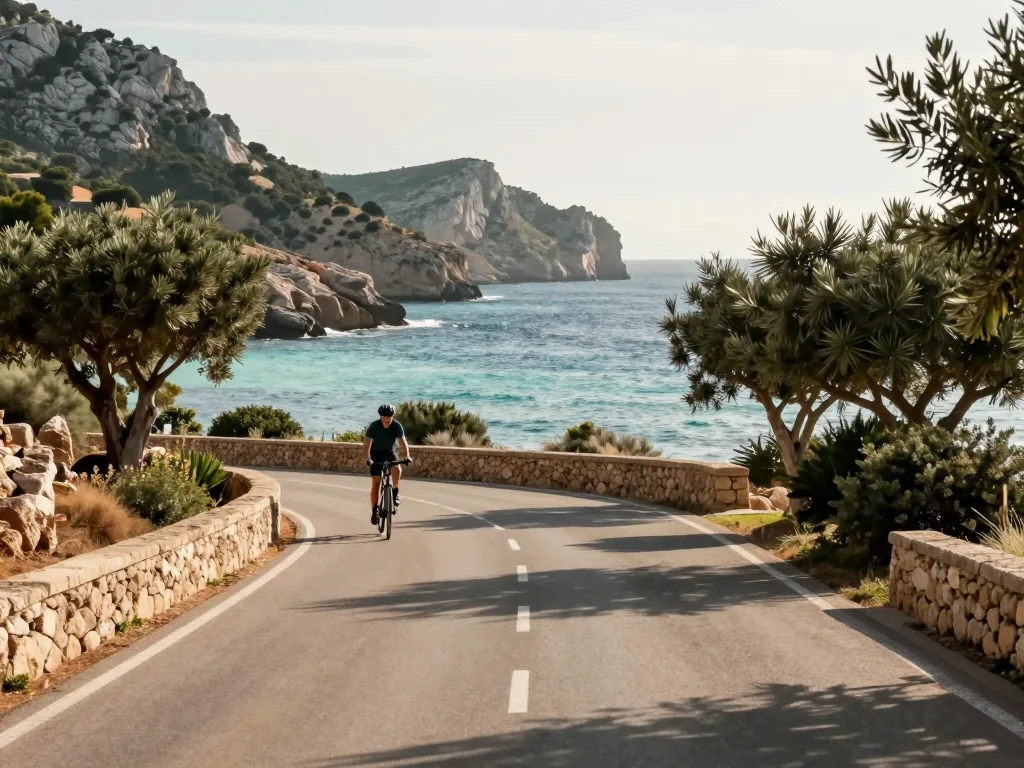
Mallorca’s fame as a cycling mecca can feel daunting, yet its real appeal lies in how approachable it is—you don’t need pro legs to take on those legendary views. Craving cliff-hugging coastal scenery or quiet inland rollers? This guide cuts through the noise, spotlighting the seven most rewarding beginner-friendly road routes for 2026. You’ll find flat, wind-sheltered stretches and gentle climbs with stunning payoffs, each paired with precise turn-by-turn directions, elevation profiles, and practical notes on traffic and where to refuel. The result? A foolproof, season-tested plan that turns your first Mallorcan ride into an epic—minus the suffering.
Understanding Mallorca’s Cycling Calendar and Terrain for 2026
Why March to May and September to November Are Ideal
Planning your first serious road cycling trip to Mallorca in 2026? The shoulder seasons are your golden window. From March through May, and again from September through November, daytime temperatures hover in that sweet spot of 15–25°C—warm enough for short sleeves by midday, cool enough that you won’t bake on a 60-kilometre loop. These months also dodge the island’s two extremes: the crushing heat of July and August, when asphalt softens and hydration becomes a full-time job, and the brief but real storm windows of December and January, when the Tramuntana range dumps rain and gusty winds on coastal roads. Traffic is noticeably lighter, too. Easter and autumn school holidays bring families, but the relentless rental-car convoys of high summer are absent. Every bike shop, cafe stop, and repair van runs at full capacity, yet you’ll rarely queue for coffee or fight for a lane on the main coastal artery.
The Beginner’s Terrain Map: Es Pla and the Southwest Coast
Knowing where not to go is the secret to a beginner-friendly Mallorca route. The Serra de Tramuntana—the dramatic mountain spine along the northwest coast—hosts the island’s most famous climbs: Sa Calobra, Puig Major, and the Coll de Sóller. They’re technical, steep, and punishing, with gradients that regularly punch past 10% and hairpins demanding constant braking. Save them for later. Your 2026 map should instead focus on two regions. First, Es Pla, the central plain stretching between Palma and Manacor. Here you’ll find a grid of quiet, flat-to-rolling country lanes flanked by almond groves and dry-stone walls. Ride for hours without ever seeing a double-digit gradient; the wind is your only real adversary. Second, the southwest coast, from Palma down to Andratx and back via the coastal road to Port d’Andratx. This area offers gentle undulations, wide shoulders, and spectacular sea views—minus the lung-busting ascents of the northern mountains. Both regions share one crucial trait: they’re forgiving. Stop at any village square for a pastry, take a wrong turn without panic, and build confidence at your own pace. For a true beginner, that sense of security outweighs any summit photo.
Essential Logistics Before You Roll
Choosing your base hub matters more than any other decision. For 2026, three towns stand out for beginners, each with its own strengths. Palma suits riders who want flexibility: the capital offers the island’s densest network of rental shops—carbon endurance bikes run €25 to €45 per day—plus repair stations and a lively café scene for post-ride cortados. From here, southwestern routes put you on quiet coastal roads within 20 minutes of leaving the city. Pick Alcúdia if flat, wind-protected riding is your goal. This northern town is quieter and cheaper (rentals from €20 to €35 daily), and it sits right on the pancake-flat Albufera Natural Park loop, where cycle paths weave through salt marshes and pine groves. For the eastern Llevant region—rolling vineyards, empty secondary roads—base yourself in Manacor. The island’s second city has no-frills workshops and quick access to lesser-known inland climbs that stay traffic-free even in peak season. Whichever you choose, book your bike at least six weeks ahead for Easter and October 2026; smaller frame sizes sell out fast.
Now, packing. Even on routes under 300 meters of elevation, the Tramuntana wind levels the playing field—a clear morning can become a chilly, headwind-heavy grind by noon. Carry two full water bottles (cages are non-negotiable), a basic repair kit with two spare tubes and a mini-pump, and SPF 50 sunscreen applied before you leave. The item beginners most often skip is a windproof gilet: it folds fist-sized, weighs nothing, and spares you shivering descents when the north wind drops perceived temperatures by 8°C in minutes. Toss in a ziplock bag for your phone and a paper map—rural signal gaps are common on Llevant routes. Finally, tell your accommodation where you’re headed and when you expect to return. Mallorcan roads are safe, but locals take long, leisurely lunches; if you break down at 2 PM, help may be slow.
Route One: Palma to Port d’Andratx Coastal Cruise
This 25–30 km one-way route from the island’s capital to the charming fishing port of Port d’Andratx is the perfect first taste of Mallorcan road cycling. Hugging the southwest coastline, it offers uninterrupted sea views and pine-scented air, with a profile that rarely kicks above a 3% gradient. There are no mountain passes here—just a smooth, rolling ribbon of tarmac that builds your confidence while you soak in the Mediterranean light.
The MA-1 and MA-10 with Dedicated Bike Lane Sections
You’ll start on the MA-1, a dual carriageway that can feel intimidating at first glance. But don’t worry: within 5 km of leaving Palma’s outskirts, a dedicated bike lane appears, running for roughly 8 km and separated from traffic by a solid white line and occasional bollards. For nervous riders, this is a godsend—you can focus on rhythm rather than rear-view mirrors. When the MA-1 merges into the MA-10 near Cap Andritxol, the road narrows to a quiet two-lane coastal highway. The bike lane disappears, yet traffic is sparse and drivers are used to cyclists. A few gentle rollers await, each one rewarding you with panoramic views over turquoise coves below. Keep an eye out for the mirador at Miramar—a perfect photo stop where cliffs drop straight into the sea.
Wind Strategy for the Return Leg
The classic mistake is riding out with a tailwind, then fighting a brutal headwind on the way back. Here, the prevailing wind is the tramuntana (northwest), which can pick up fiercely in spring. So check the morning forecast on a local wind app before setting off—look for speed and direction, not just temperature. If the tramuntana is blowing at 20 km/h or more, plan around it: ride out early when the wind is often lighter, then return before noon as it strengthens. Alternatively, reverse the route—start in Port d’Andratx, ride into Palma with the wind at your back, and take a bus or taxi back if you’re tired. Never underestimate how much energy a headwind can drain from a beginner’s legs. With smart wind strategy, this ride becomes pure pleasure: a gentle, scenic cruise proving Mallorca’s cycling fame is accessible to everyone.
Route Two: The Albufera Natural Park Circular Loop
A 30–40 km Flat Classic Near Alcúdia
If you’ve ever dreamed of a road ride where your legs feel fresh, your lungs never burn, and your GPS stays suspiciously quiet, this is it. Starting and finishing in the bustling town of Alcúdia, the loop offers a 30–40 km circuit as close to a “zero-effort” epic as Mallorca gets. The route hugs the park’s perimeter on quiet, rural asphalt winding through wetlands, reed beds, and canals. Total elevation gain? Practically nil—think 50 metres over the whole ride, most of which is a gentle bridge approach. Navigation is embarrassingly simple: keep the park on your left (or right, depending on your start point) and follow the perimeter road. You’ll pass the famous Es Comú viewing platform, where you can dismount and scan for purple swamphens, flamingos, and the occasional osprey. These birdwatching stops are the real “climbs” here—each rewards you with a different slice of wetland life. Pack small binoculars or just use your phone’s zoom; the flat terrain means you can stop anywhere without worrying about losing momentum on a hill.
Best Time of Day to Avoid Local Traffic
The Albufera roads are blissfully quiet, but not empty. Between 10:00 and 16:00, you’ll share the tarmac with farm tractors hauling produce, delivery vans servicing the park’s restaurants, and the occasional hurried school run parent. To keep this ride as serene as the wetlands themselves, set off before 10:00—the morning light over the marsh is spectacular, and the air smells of salt and pine. Alternatively, start after 16:00, when the afternoon heat fades and visitors thin out. The flat, wide shoulders and clear sightlines make this loop genuinely safe for first-time group rides; you can chat side-by-side without fear of sudden bends or hidden driveways. One local tip: on Sundays, the perimeter road is often closed to motorised traffic until noon, turning the whole loop into a car-free paradise for cyclists. Check the park’s 2026 noticeboard or the Alcúdia tourist office for exact dates. For post-ride fuel, the Café de la Mar at the Port d’Alcúdia does a mean ensaïmada and flat white—budget from €4 to €8 per coffee and pastry. Total ride time, with birdwatching stops, is typically 1.5 to 2.5 hours, making this the perfect “rest day” epic or a gentle warm-up for the island’s bigger climbs.
Route Three: The Ruta de la Pedra en Sec in Llevant
For cyclists who want the flavour of Mallorca’s interior without the relentless elevation of the Tramuntana, this loop between Artà and Capdepera is the perfect introduction. The route’s name comes from the island’s iconic dry stone walls (pedra en sec), a UNESCO-recognised craft that lines nearly every lane here. You’ll ride through a landscape of almond groves, ancient olive terraces, and low scrubland, with the sea occasionally glinting to the east. The full circuit is a manageable 40–50 km, and crucially, it’s almost entirely flat. The few “climbs” are really just gentle rollers, none exceeding a 5% gradient, and they rarely last longer than two or three minutes. Traffic is sparse on the secondary lanes between Artà, Capdepera, and the small hamlet of Betlem, making this a relaxed, low-stress ride where you can focus on the scenery rather than car mirrors.
Navigating the Short Climbs with Confidence
The key to enjoying this route is understanding that the climbs are not tests of strength but changes of rhythm. Approach each one by shifting to an easier gear well before the road tilts upward—ideally, as soon as you see the gradient start to kick. Keep your cadence steady, around 80–90 revolutions per minute, and resist the urge to stand up on the pedals unless you really need to. Seated climbing is more efficient and saves your lower back. As you crest each small rise, use the following descent to recover fully: tuck into a relaxed position, let the bike roll, and take a few deep breaths. Because no climb lasts more than a few minutes, you’ll never feel overwhelmed. A good midway pause is the viewpoint at the Ermita de Betlem, a hilltop hermitage with panoramic views over the bay of Alcúdia—well worth the short, slightly steeper ramp to reach it. After that, the road back to Artà is gently downhill, allowing you to finish strong and still have energy for a late lunch in the town’s main square. For bike hire, expect to pay from €25 to €45 per day for a decent road bike in this region, with multi-day discounts often available. The route is well-signposted in parts, but a GPS file is recommended, as some turns are easy to miss among the farm tracks. Carry at least two water bottles; services are limited outside Artà and Capdepera, especially in the summer months.
Route Four: The Manacor to Artà Via Verde (Green Way)
A Traffic-Free Former Railway Track
For the purest introduction to Mallorcan cycling, this converted railway line offers a stress-free corridor through the island’s rural heart. The Via Verde runs roughly 20 kilometres between the market town of Manacor and the hilltop village of Artà, following the old Ferrocarril de Sóller route that once carried oranges and passengers. Today, it is a signposted greenway, completely closed to motor vehicles, making it the safest road-cycling option for absolute beginners. The surface mixes smooth, compacted gravel with short tarmac stretches—perfectly suited to road bikes with 25mm tyres or wider. You’ll roll gently through almond groves, past dry-stone walls, and over restored iron bridges, with the Serra de Llevant rising softly to the east. The gradient is negligible: a steady, almost imperceptible climb from Manacor’s outskirts. That leaves you free to focus on gear handling, hydration, and simply enjoying the motion. Picnic tables and shaded rest stops appear every few kilometres, and green directional signs keep you on track. Start early from Manacor’s old station, where parking is free, and you’ll likely have the path to yourself until mid-morning.
Connecting to Other Flat Lanes in Es Pla
Once you’ve conquered the greenway with confidence, the real magic begins when you link it to the surrounding network of rural lanes in Es Pla. These narrow, low-traffic asphalt roads cut through the island’s vast agricultural plain, between fields of wheat, sunflowers, and carob trees. A classic extension: ride the Via Verde to Artà, then loop back through Sant Llorenç des Cardassar and Son Servera, creating a 50–60 km day that feels far longer in character than in effort. The terrain stays almost perfectly flat, with only a gentle roller near the coast, so your legs remain fresh. But do not underestimate the wind. The Pla is wide open, and a brisk Tramuntana or Llevant can turn a peaceful pedal into a constant battle. Check the forecast before setting out, and plan the outward leg into the wind—then the return becomes a fast, tailwind-assisted glide. Carry at least two bottles, as fuel stops are sparse between villages, and pack a light gilet for exposed sections. The lanes are well-surfaced but occasionally have loose gravel at junctions, so take care when turning. This loop is the perfect second or third ride for a beginner, offering a real sense of achievement without the mountain passes.
Route Five: The Palma Bay Flat Circuit
A Short 20–25 km Warm-Up Along the Bay
This is the ride you’ll thank yourself for on day one. Tracing the coastline east of Palma, the route links dedicated bike paths, quiet service roads, and the occasional seaside lane. It’s a genuinely flat, low-stress spin, ideal for shaking out jet-lagged legs or easing into the island’s rhythm. The full loop—out from the city’s edge toward Coll d’en Rabassa and S’Arenal, then back along the water—comes in at roughly 20 to 25 kilometers, depending on how far you extend toward Es Carnatge. There’s no climbing to speak of, and the surface stays consistently smooth, so you can focus entirely on the view: the deep blue of the Bay of Palma on one side, the Serra de Tramuntana’s hazy silhouette on the other. For beginners, this is the perfect confidence builder. You’ll cover real ground, feel the sea breeze, and still have energy for a long lunch by the port.
Using the Paseo Marítimo and Coastal Paths
The trick is knowing exactly where to ride. On the Paseo Marítimo—the broad promenade running from the city center toward the airport—stick firmly to the designated cycling lanes painted along the seaward side. They’re well-maintained and clearly marked, but they do share space with joggers and dog walkers, so keep your speed moderate and your bell handy. Once you pass the Balearic Yacht Club and the old gasworks, the path narrows into a proper coastal track that hugs the shoreline for several uninterrupted kilometers. This is the best section: you’ll glide past rocky coves, tiny beaches, and the occasional fisherman’s hut, with zero car traffic. The only real tip for 2026 is timing. Set off before 9:00 a.m. if you can—early mornings bring calm winds off the bay and far fewer pedestrians, making the narrow stretches feel almost private. By mid-morning, the promenade fills with strollers and cyclists, and the pace slows considerably. Carry a small lock, because you’ll want to stop at one of the beachside kiosks for an espresso and an ensaïmada before looping back. The entire ride, including coffee stop, takes about two unhurried hours—and it’s the perfect primer for the bigger climbs that await later in your week.
Route Six: The Sineu Market Loop via Es Pla
If you want authentic Mallorcan life without the alpine grind of the Serra de Tramuntana, the Sineu Market Loop is your perfect introduction to the island’s beating heart. No 1,000-metre pass required—just open farmland, ancient stone villages, and the satisfying rhythm of a gently rolling road.
A 45–55 km Rolling Ride Through the Central Plain
Start from Manacor or Inca, both well-served by train from Palma if you’re staying on the coast. From Manacor, head west on the quiet MA-3320 towards Sant Joan; from Inca, take the MA-3220 east. Soon you’ll be swallowed by the vast, golden expanse of Es Pla—Mallorca’s central agricultural plateau. This is wheat country, punctuated by almond and carob trees, with roads that are smooth, wide, and gloriously empty. The terrain is genuinely gentle: long, shallow rollers rather than any sustained climb. You’ll spin comfortably in a mid-range gear, never reaching for your granny ring. The only real effort comes from the prevailing south-easterly breeze, which can firm up the return leg—but at this distance, it’s a pleasant workout, not a battle.
The loop naturally links Sant Joan, Petra, and Ariany, each with a single square, a stone church, and a bar serving ice-cold almond horchata. Don’t rush through them. Stop at Petra’s fountain for water, and admire the restored windmills dotting the horizon—a reminder that this flat land once powered the island’s grain trade. Depending on your start point and detours, the full circuit lands between 45 and 55 km. With minimal elevation gain (roughly 200–300 metres total), you can finish in under two and a half hours at a relaxed pace—ideal for a half-day adventure or a first ride after a long travel day.
Timing Your Ride Around the Wednesday Market
Here’s the insider’s key: Sineu hosts Mallorca’s most authentic weekly market every Wednesday. Time your ride for that day, roll into the main square around 11 a.m., lock your bike to a railing, and wander among stalls selling local cheese, olives, live poultry, and handmade leather goods. Grab a pa amb oli and a coffee for a few euros—you’ll feel like a local, not a tourist.
If crowds aren’t your thing, avoid Wednesday entirely. The narrow streets of Sineu pack with pedestrian traffic, market vans, and tour buses, making it stressful on two wheels. On any other day—especially Tuesday or Thursday—the village is a sleepy, photogenic ghost town, and you’ll have the cobbled lanes and central plaza almost to yourself. For the smoothest experience, ride clockwise from Inca (or counter-clockwise from Manacor) so you hit Sineu mid-ride, just as your legs warm up and your appetite builds. Either way, this loop delivers the easiest epic on the island: no summit, no drama, just pure, rolling Mallorcan soul.
Route Seven: The Campos to Ses Salines Flat Run
A 35–40 km Out-and-Back on Dead-Flat Roads
If the Serra de Tramuntana’s climbs feel like a rite of passage, this southern route is your reward for showing up—no ascent required. Start in the agricultural town of Campos, where the church tower marks your departure point, and head due south on the MA-6101. The asphalt is silky smooth, the gradient virtually zero, and the landscape opens into a patchwork of salt pans, windmills, and low scrub stretching all the way to the Mediterranean. You’ll roll through Ses Salines, a sleepy village with a couple of decent bakeries, then push on to the coastal edge at Es Caragol or Colònia de Sant Jordi if you want extra kilometres. The full out-and-back sits comfortably between 35 and 40 km, making it the shortest ride here—ideal for a recovery day or a first taste of Mallorcan roads. But don’t be fooled by the flat profile. This is open, exposed terrain with zero shade; by late April, the midday sun feels like a heat lamp. Start at 7:30 a.m. or earlier, carry two bottles, and reapply sunscreen at the turnaround. In spring, a 9 a.m. start is already too late.
Dealing with Crosswinds on Open Terrain
The tramuntana—the same wind that batters the northern mountains—funnels down this corridor with surprising force. On a calm morning, you’ll barely notice it. But when the forecast says “moderate breeze,” expect gusts that push you sideways across the lane. The roads here are dead straight, so you’ll see the wind coming, yet you’ll also feel it for kilometres at a time. Ride in a compact group of three to five cyclists, rotating through the windward side so no one gets shelled. Solo? Tuck low on the drops, keep your elbows bent, and consider clipping on aero bars if you have them—they genuinely help on the return leg when the wind is often at your back but still buffeting. The key is saving energy for the way back: the outward leg feels easy with a tailwind, but the return can turn into a grind. Check the wind direction before leaving Campos. If it’s blowing from the southwest, push harder on the outward leg and coast home. From the northeast, do the reverse. Either way, keep your gearing spinning, not mashing, and you’ll finish feeling fresh enough for a plate of ensaimada in Ses Salines before the drive back.
Advanced Beginner Considerations for 2026
Reading Wind Forecasts and Planning Return Legs
Before you clip in, check the wind direction as routinely as you fill your bottles. Mallorca’s prevailing winds—the serè from the southwest and the cooler tramuntana from the north—can turn a gentle 20 km/h cruise into a grinding slog. The golden rule for 2026 remains unchanged: never plan a route where your return leg faces a strong headwind. Use a reliable app like Windy or the Spanish AEMET forecast, and check the gust speed, not just the average. If the forecast calls for 25 km/h sustained from the east, design your loop to ride east first, then west back to base. On the classic Pla de Mallorca flats, start against the breeze in the morning when you’re fresh, and let the tailwind push you home in the afternoon. A simple habit: draw your route on a map, draw the wind arrow on top, and flip the loop if needed. This single decision will save you hours of misery and make your “easy” ride actually feel easy.
Using Signposted Cycling Routes and Vies Verdes
By 2026, Mallorca’s network of signposted cycling routes and greenways (Vies Verdes) has expanded significantly, and these are your best friends as an advanced beginner. The island now boasts over 200 km of dedicated cycling lanes, many following old railway corridors—perfectly flat, car-free, and with predictable surfaces. Look for the green-and-white signs marking the Via Verde de Mallorca segments, particularly the route from Manacor towards Artà and the newer stretch near Campos. These routes eliminate the two biggest stressors for a newer rider: unpredictable traffic and surprise potholes. They also tend to have shade, water fountains, and occasional repair stations. When planning your 2026 rides, prioritise these corridors for at least 60% of your distance. They may not offer dramatic mountain views, but they deliver consistent, low-stress pedalling that builds confidence and leg strength. For a genuinely epic but manageable day, combine the Via Verde from Petra to Manacor with the quiet backroads towards Sineu, then return via the same greenway—you’ll never touch a main road.
Group Riding Etiquette and Safety on Quiet Roads
Even on Mallorca’s quietest lanes, you will likely encounter other cyclists—and in 2026, group riding is more popular than ever. The unwritten rules are simple but crucial. Ride single file on any narrow lane, especially when a car approaches; two abreast is only acceptable on wide, perfectly visible straights. Signal every turn clearly and early, using a full arm extension, and call out “car front” or “car back” to your group. Do not overlap wheels, and keep a minimum of two bike lengths between you and the rider ahead on descents. For safety, carry a phone with the local emergency number saved—112 is the universal EU number—and know your exact location via a GPS app. Finally, and this is non-negotiable for 2026: do not ride after dusk without a front white light and rear red light, even on the quietest roads. Spanish law requires them, and rural drivers are not expecting a dark cyclist. A simple rear light with a flashing mode and a front light of at least 200 lumens is your minimum kit. These small habits will keep your epic ride memorable for all the right reasons.
Common Mistakes and How to Avoid Them
Overestimating Distance on Flat Terrain
The most frequent error I see from newcomers to Mallorca is assuming that a flat route means an easy route. The island’s southern plains—around Campos, Ses Salines, and the road to Colonia de Sant Jordi—are deceptively punishing. Flat does not mean effortless. Two factors conspire against you: the relentless Mediterranean wind, which accelerates across the open farmland, and the dry heat, which in 2026 is averaging 2°C higher than a decade ago during spring and autumn. A 50 km loop on paper can feel like 80 km in reality. The fix is simple: start with 30 km on your first day, even if you ride 100 km at home. Your body needs to adapt to the constant, low-level resistance that flat terrain here creates. Then increase by 10 km per day—no more. This progressive loading lets your legs adjust to the subtle, grinding fatigue that comes from never getting a downhill rest. On day one, ride from Palma to Es Trenc and back. On day two, add the extra loop through Sa Rapita. By day three, you can credibly attempt the 60 km circuit to Santanyi. Respect the arithmetic, and you will finish the week strong instead of broken.
Ignoring the Tramuntana Wind Forecast
Even on routes that stay entirely in the flat south, the Tramuntana wind—which funnels down from the Serra de Tramuntana mountains—dictates everything. A 20 km/h headwind on flat ground feels like a 5% climb. That is not an exaggeration; it is the physics of drag. I have watched experienced cyclists burn out by planning a route based on map distance alone, then facing a brutal, invisible wall for two hours. The rule in 2026 is simple: check the wind direction first, then choose your route. The Balearic Weather Service publishes hourly wind maps, and every local cycling app now integrates live gust data. Your approach should be to ride into the wind for the first half of your ride, and return with it at your back. On the flat southern routes, the prevailing wind is from the southwest from March to June. So plan your outbound leg southwest—toward the airport coast or the Salobrar de Campos wetlands—and your return northeast. If the forecast shows a 25 km/h headwind on your planned outward leg, reverse the loop. Do not be stubborn. The island has more 30 km loops than you can ride in a week, and almost all of them can be ridden clockwise or counter-clockwise. One practical tip: before you leave your hotel, hold a wet finger up. If it dries within five seconds, the wind is strong enough to add 30% to your perceived effort. Adjust accordingly.
Final Checklist for a Successful Beginner Trip
Pre-Ride Checks and Fueling Strategy
Before you roll out from Palma, Port de Pollença, or anywhere else on the island, build a ten-minute ritual that prevents 90% of roadside misery. Squeeze your tires—they should feel rock-hard. If they give even slightly, add air to the manufacturer’s recommended PSI, typically 90–110 for road bikes. Spin each wheel and squeeze both brake levers hard: the pads should bite evenly, without rubbing. Then run the chain through your fingers (carefully) to feel for stiff links or excessive grime. A quick lube the night before saves you grinding up the Coll de Sóller. On fueling, eat a carb-heavy breakfast—porridge, toast with jam, or a banana—exactly two hours before you start. That gives your body time to digest without cramping. For any ride over 40 km, carry two energy bars or a gel, plus a bottle of electrolyte mix. Mallorca’s spring and autumn heat is deceptive; you’ll sweat more than you think, even on “flat” coastal routes like the stretch from Alcúdia to Can Picafort.
Emergency Contacts and Repair Basics
Even on beginner routes, you’re never more than 20 km from a village, but that’s a long walk in cleats. Save your rental shop’s phone number in your phone—not just in your pocket—and write it on a sticker on your stem if you’re prone to losing things. Most shops in Alcúdia, Pollença, and Palma offer WhatsApp support during riding hours; call them first if you’re stuck. For mechanicals, carry a spare inner tube (make sure it matches your valve type—Presta is standard), two tire levers, and a mini pump that actually fits your frame. Practice changing a tube once at home or at the shop before you go; it takes ten minutes the first time, three after that. Many roundabouts and scenic viewpoints in Mallorca now have roadside repair stations with basic tools, but they’re often stripped of levers or have a pump that doesn’t fit. Treat them as a bonus, not a plan. Always carry a fully charged phone with the local emergency number (112) saved—and know that your rental shop’s after-hours line is your first call for a pickup, not a taxi, which can be slow and expensive in rural areas. With these checks and a few grams of gear, you’ll turn a potential disaster into a story you tell over ensaimada at the café.
Conclusion
Mallorca’s beauty doesn’t have to come with a sufferfest. These seven routes prove that epic scenery, smooth tarmac, and gentle gradients are perfectly accessible to any beginner in 2026. Whether you choose the coastal calm of the Pollença flatlands or the rolling vineyards of the southeast, each ride builds your confidence while letting you soak in the island’s best views. Your next step is simple: pick the route that matches your mood, check the forecast, and book a bike fitting before you land. Start with the 40-kilometer Alcúdia loop this spring—it’s the perfect first taste of Mallorca’s riding magic. You’ll be planning your next trip before the wheels cool down.